






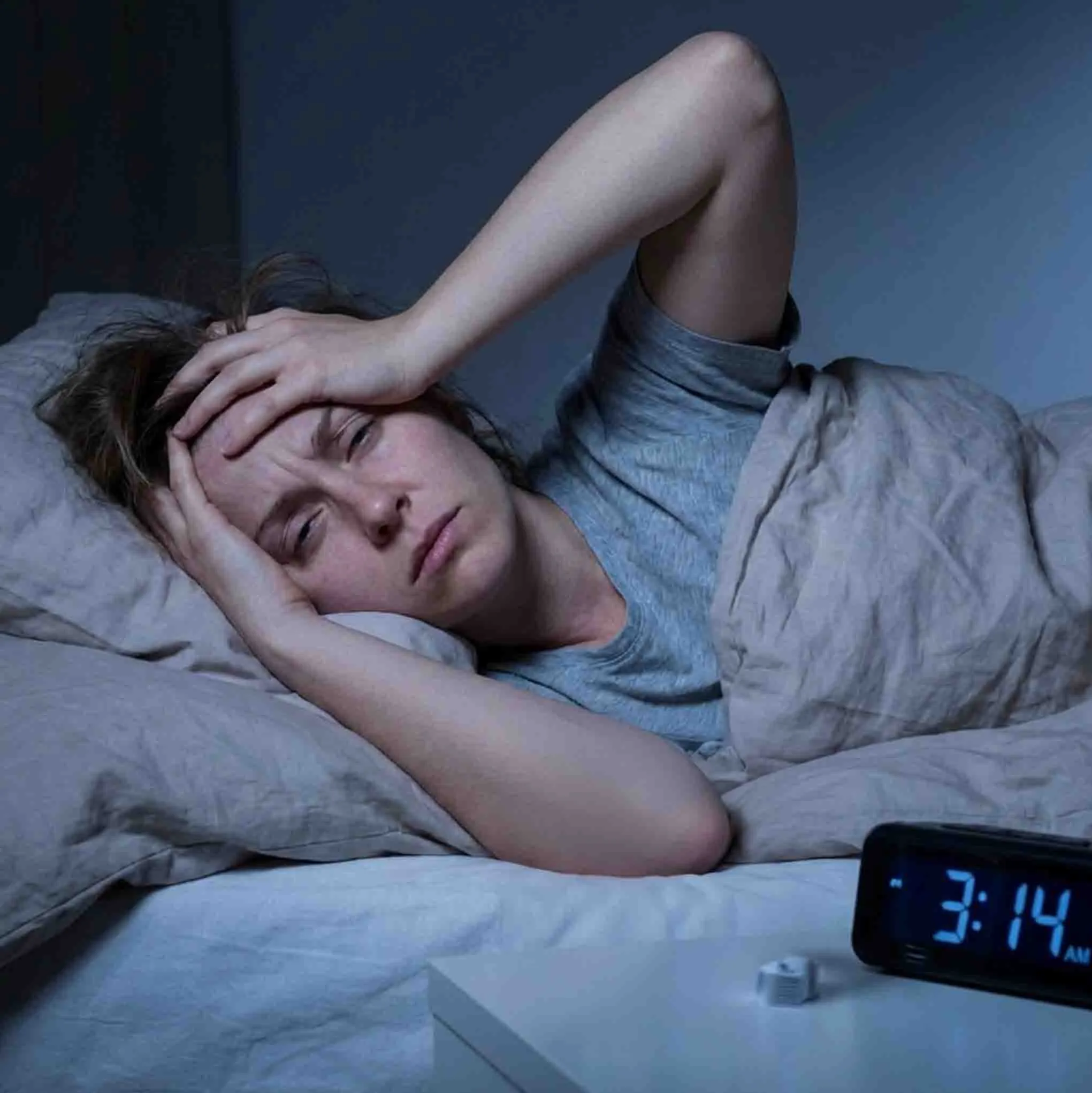
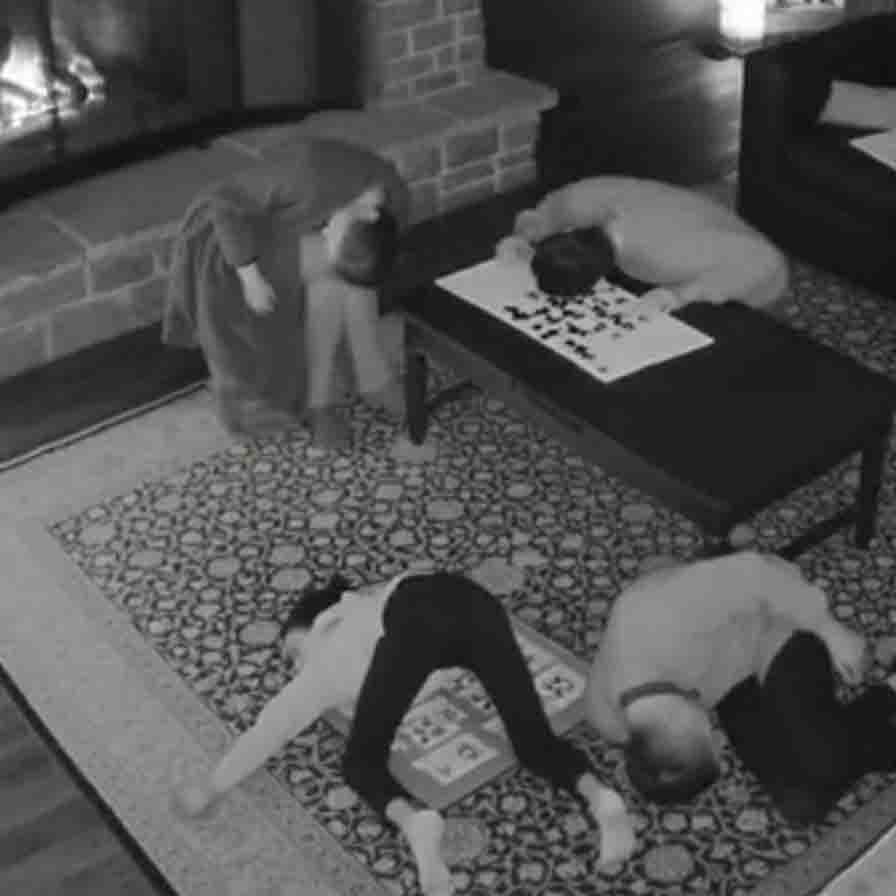
It's 2 AM. You wake up with a pounding headache. Dizzy. Confused.
Something's wrong. You need to get up. You need to get your kids.
But your body won't cooperate. Your legs feel like concrete. Your thoughts are moving through thick fog.
Where's the door? Where are your kids' rooms? You can't remember.
You try to stand. You collapse.
By the time you realize you're in danger, you're already too disoriented to escape.
That's what 70 PPM does to your brain. That's the level traditional alarms are designed to alert at.
Even worse, in 57% of cases, there's no alarm at all until much later. Just silence while you slip away.
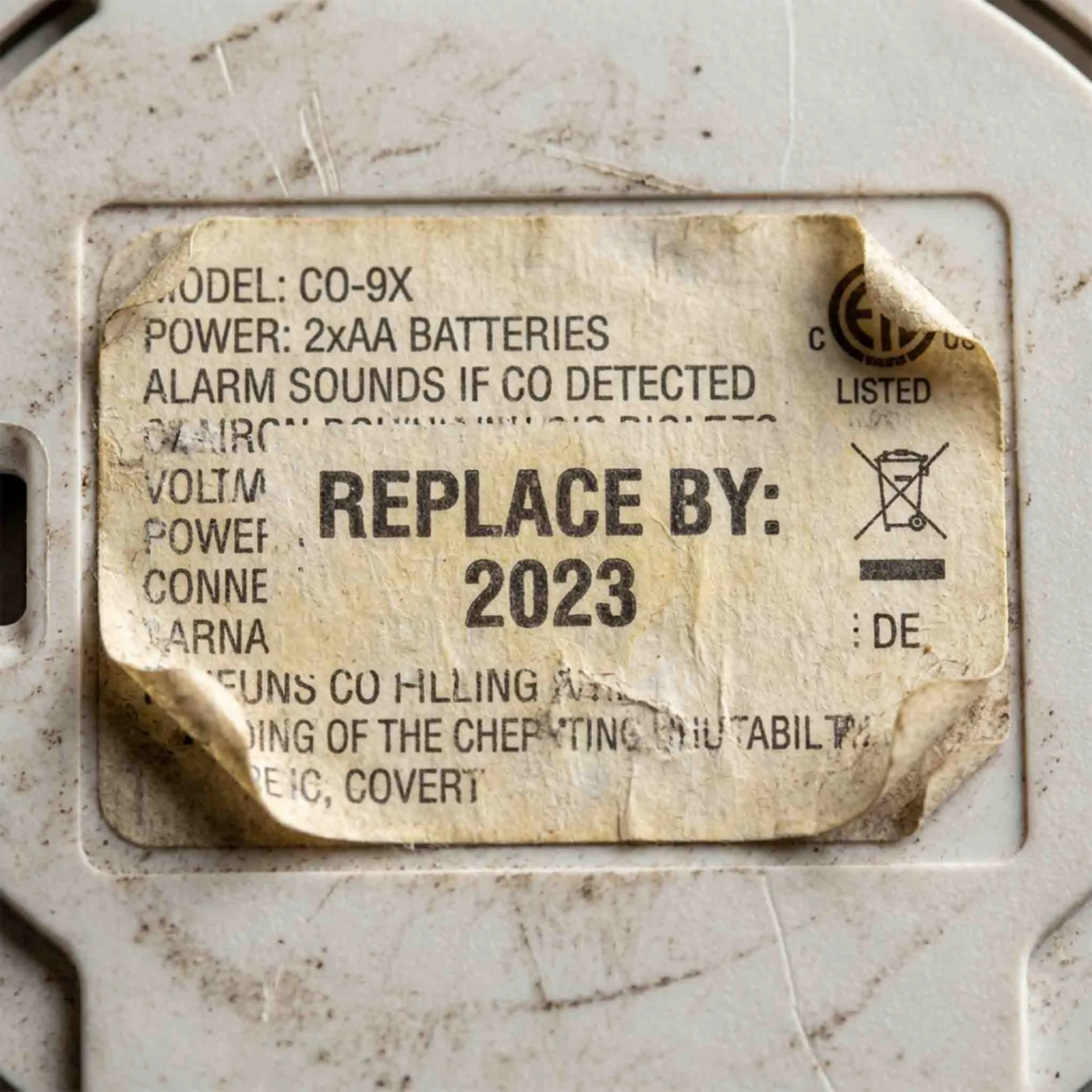
Most CO detectors expire after 5-7 years and completely stop functioning. The sensors wear out. The alarm stops working.
And the green light just keeps blinking.
Families go years—sometimes a decade—thinking they're protected. They see that reassuring green glow every night and assume they're safe.
They're not… And they often only realize it when it's too late.
Ask yourself: When was your detector installed? 2020? 2018??
If you don't know the answer, you're already in danger.

For weeks, maybe months, you wake up exhausted. Every single morning.
Headaches that won't quit. Brain fog. Snapping at your kids. Forgetting simple things.
Your kids can't focus at home—but they're fine at school.
You've been to the doctor. Everything checks out. So you blame stress. You blame age. You blame life.
When the whole time, it's the air you're breathing.
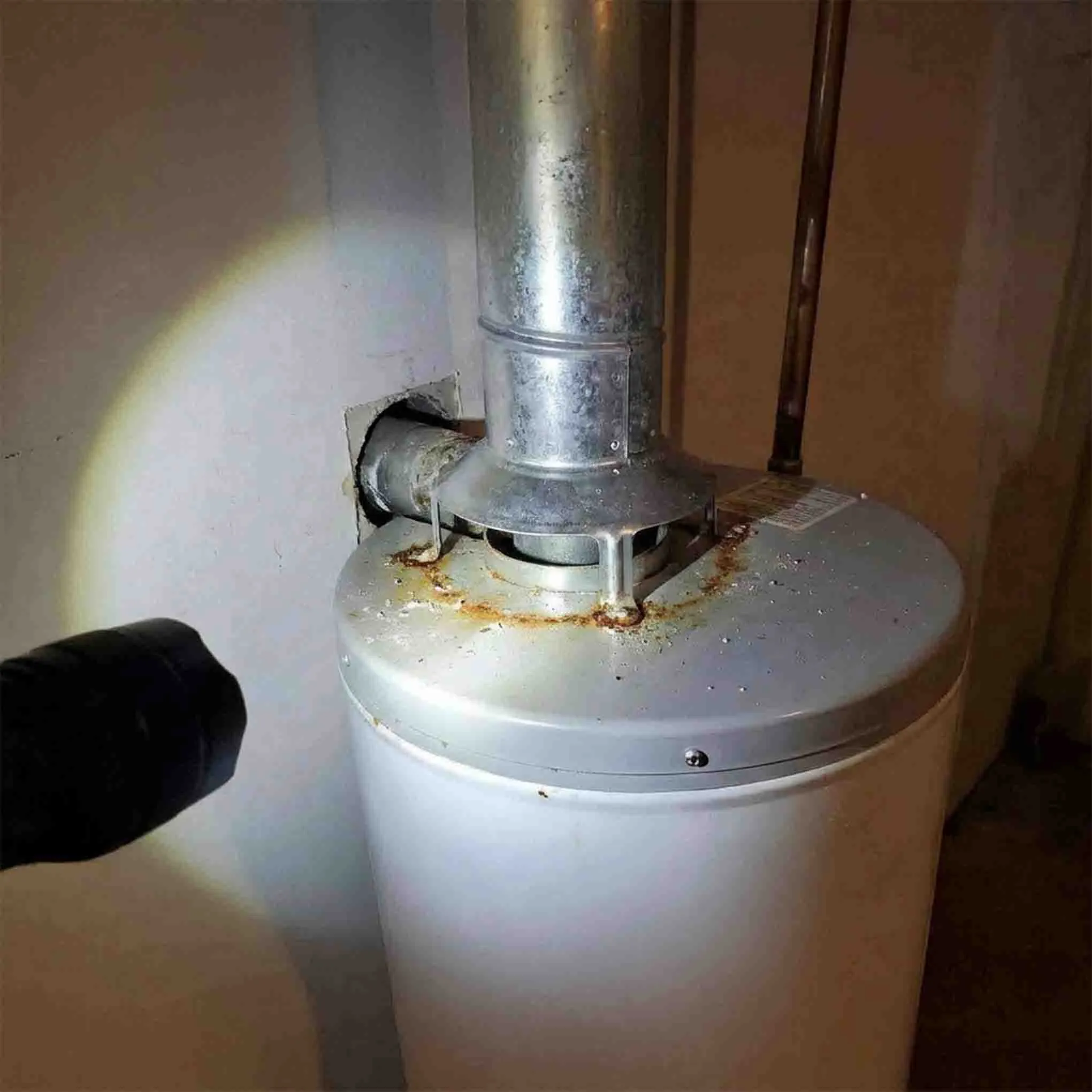
20 million American homes are breathing 10, 15, 20 PPM of carbon monoxide right now. Enough to make them sick. Not enough to set off their detectors.
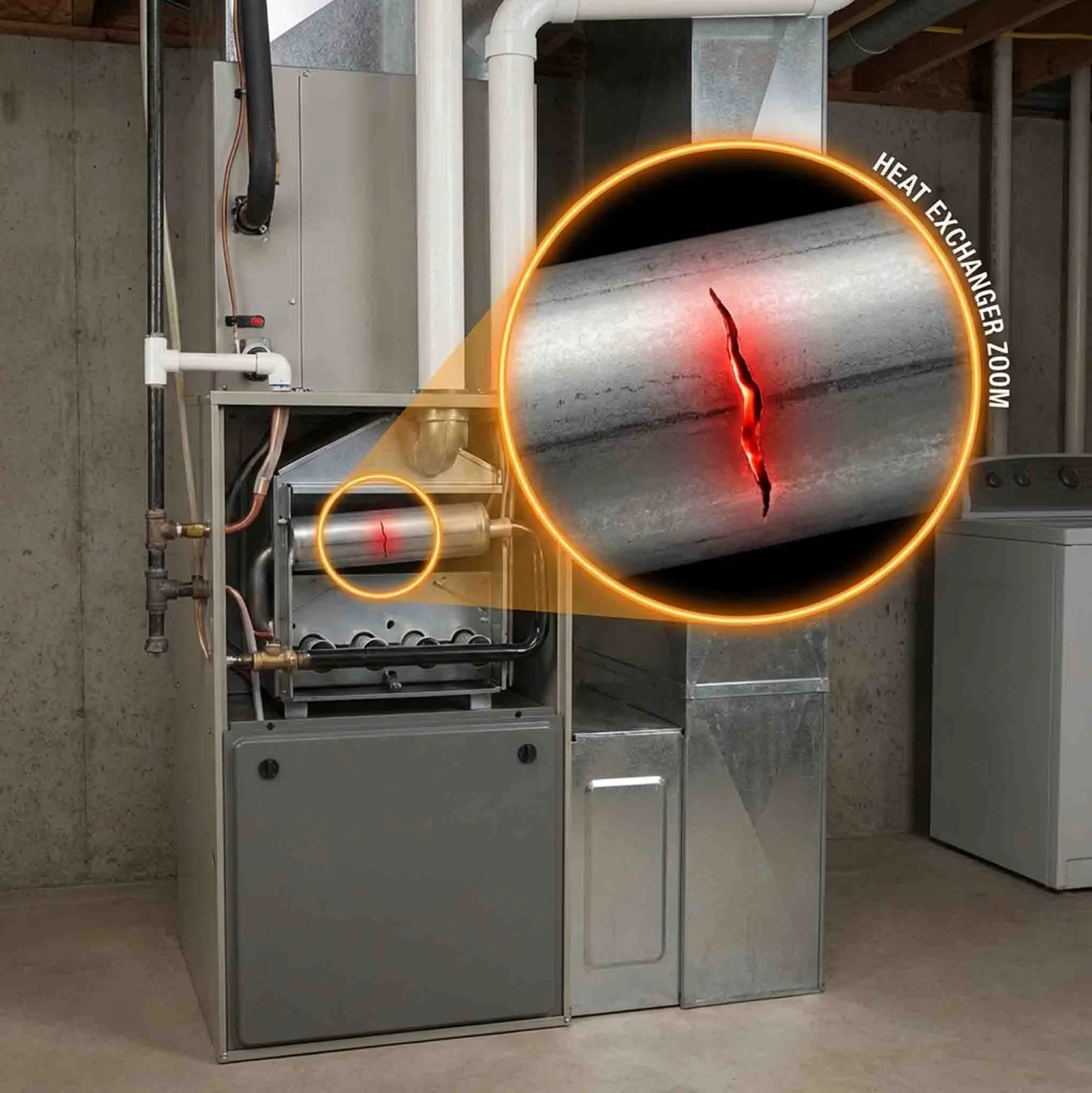
Until one cold night, your furnace works harder and that small crack becomes bigger. 15 PPM becomes 100 PPM in hours. And by the time your alarm goes off, you can't even hear it.
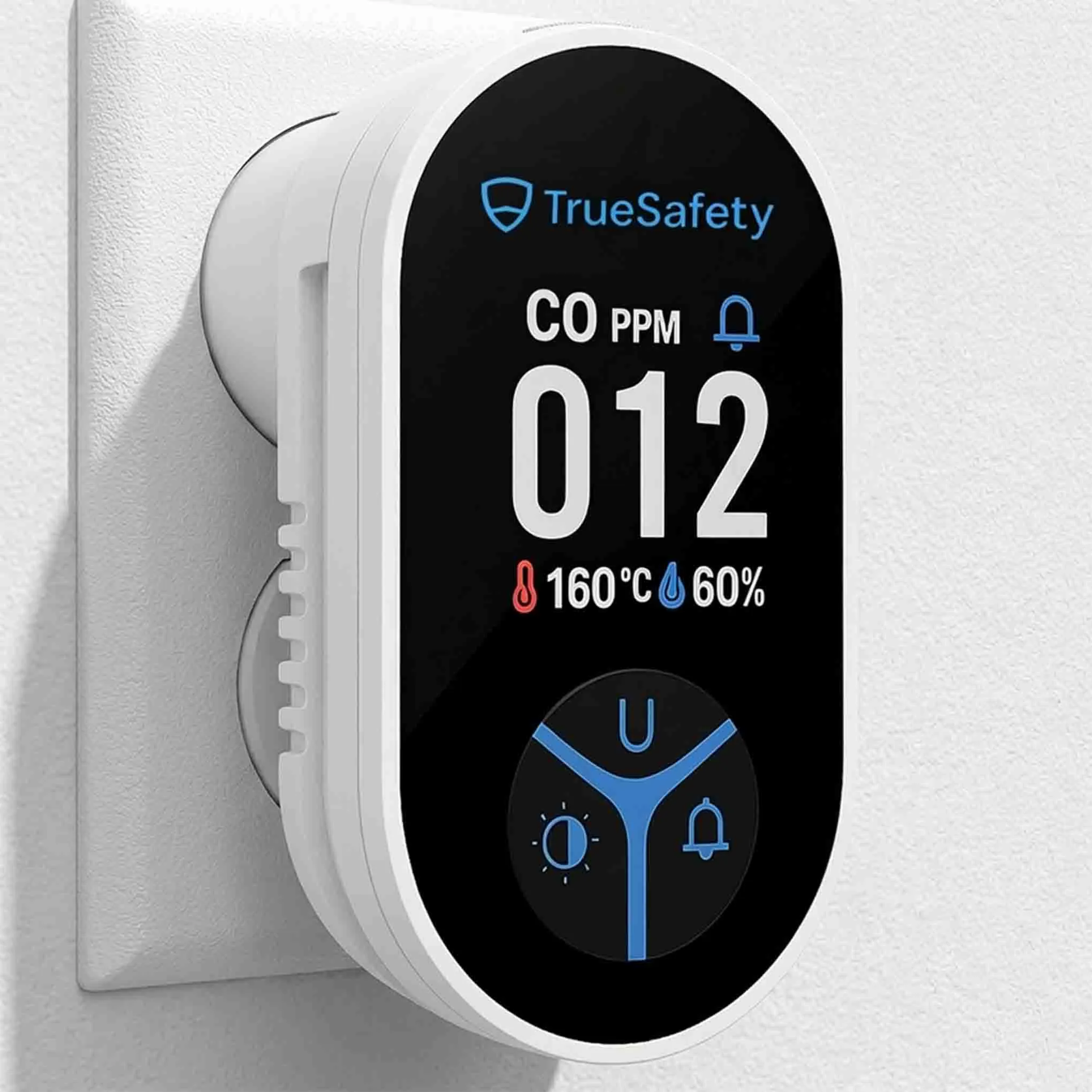
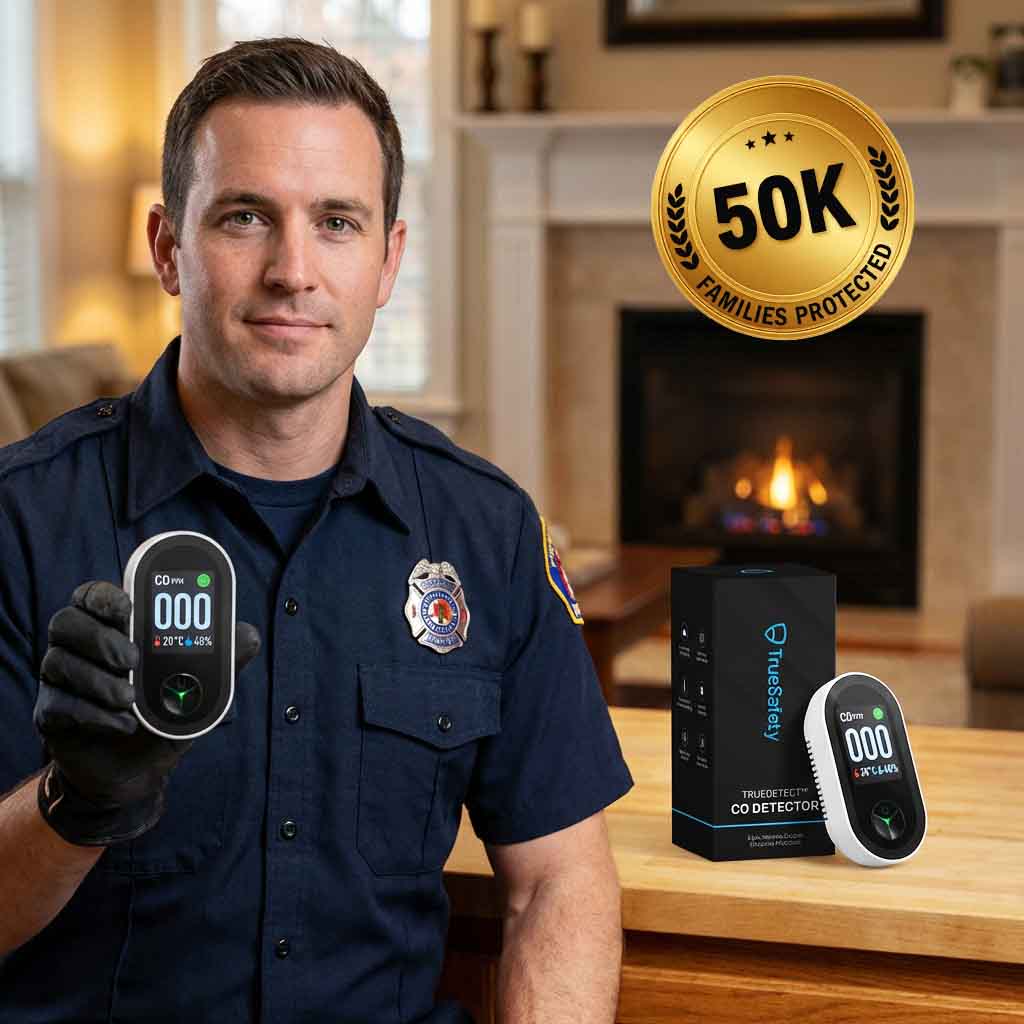
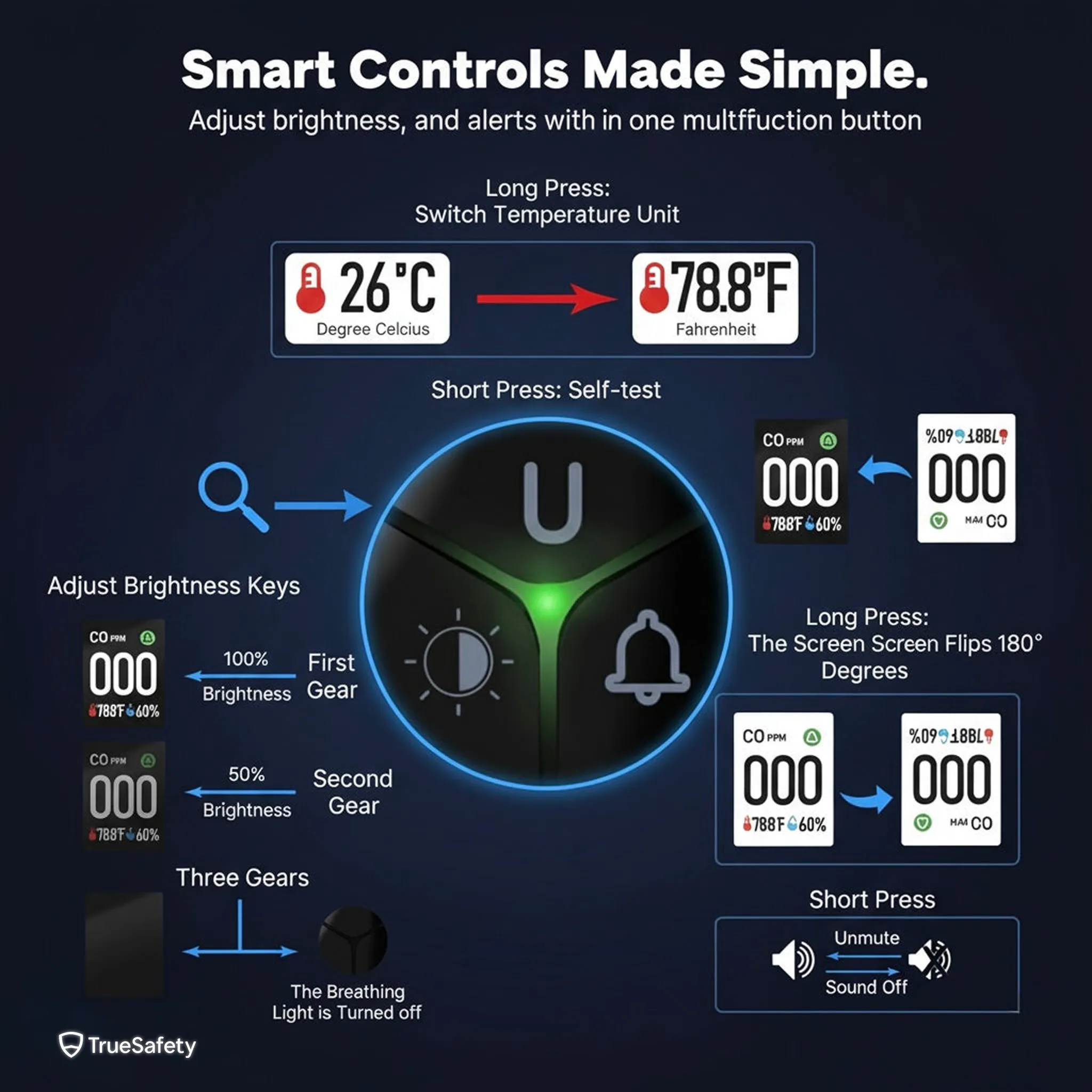
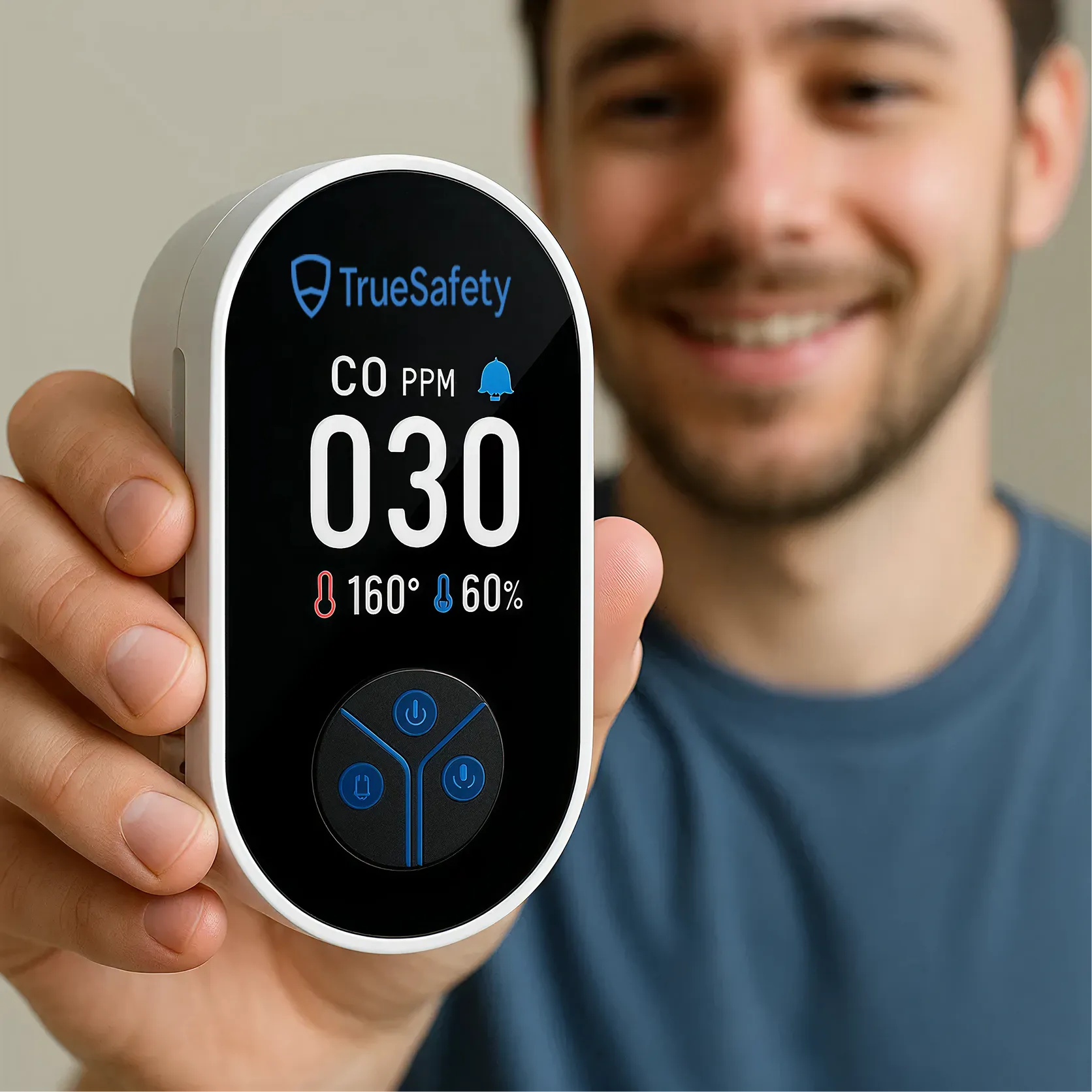
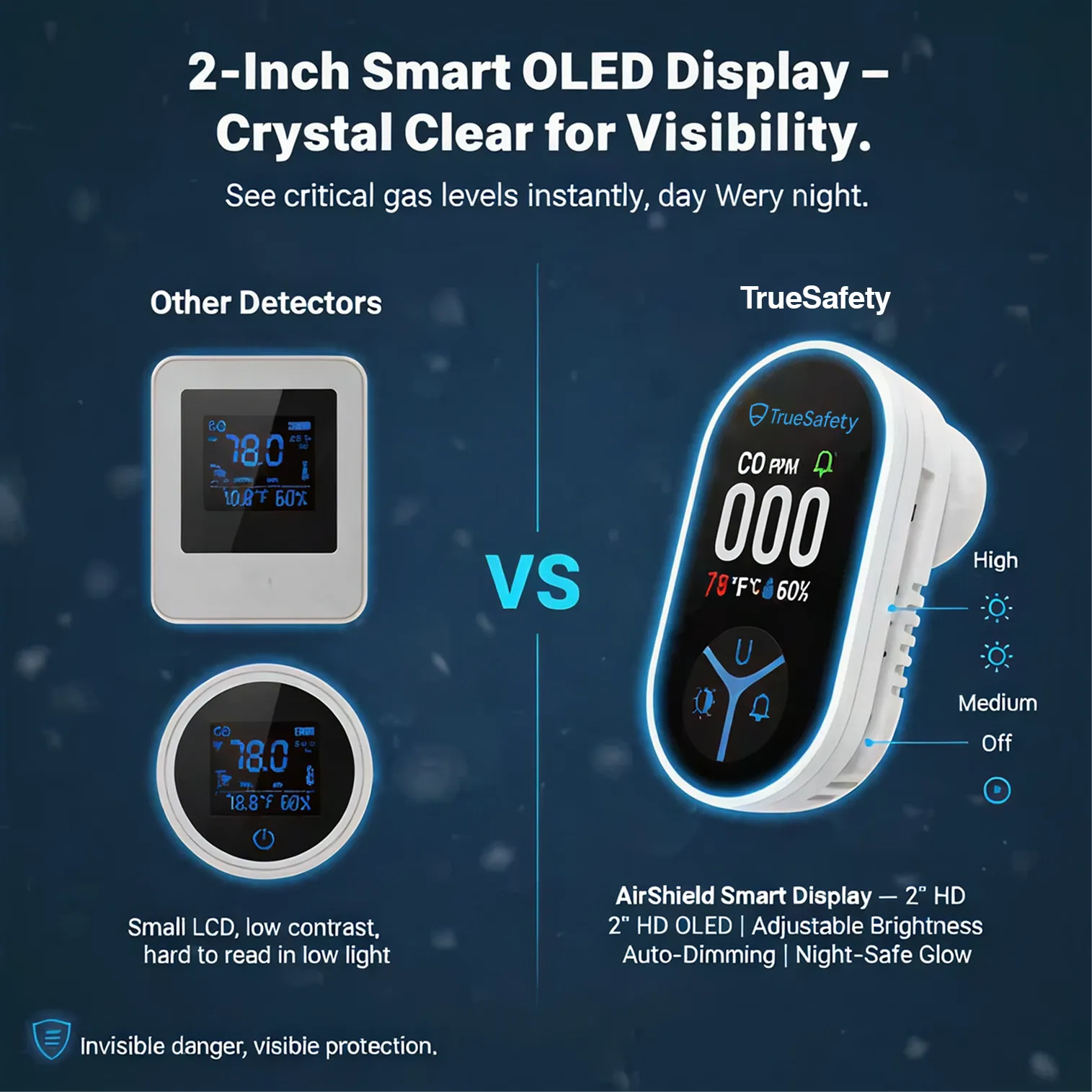
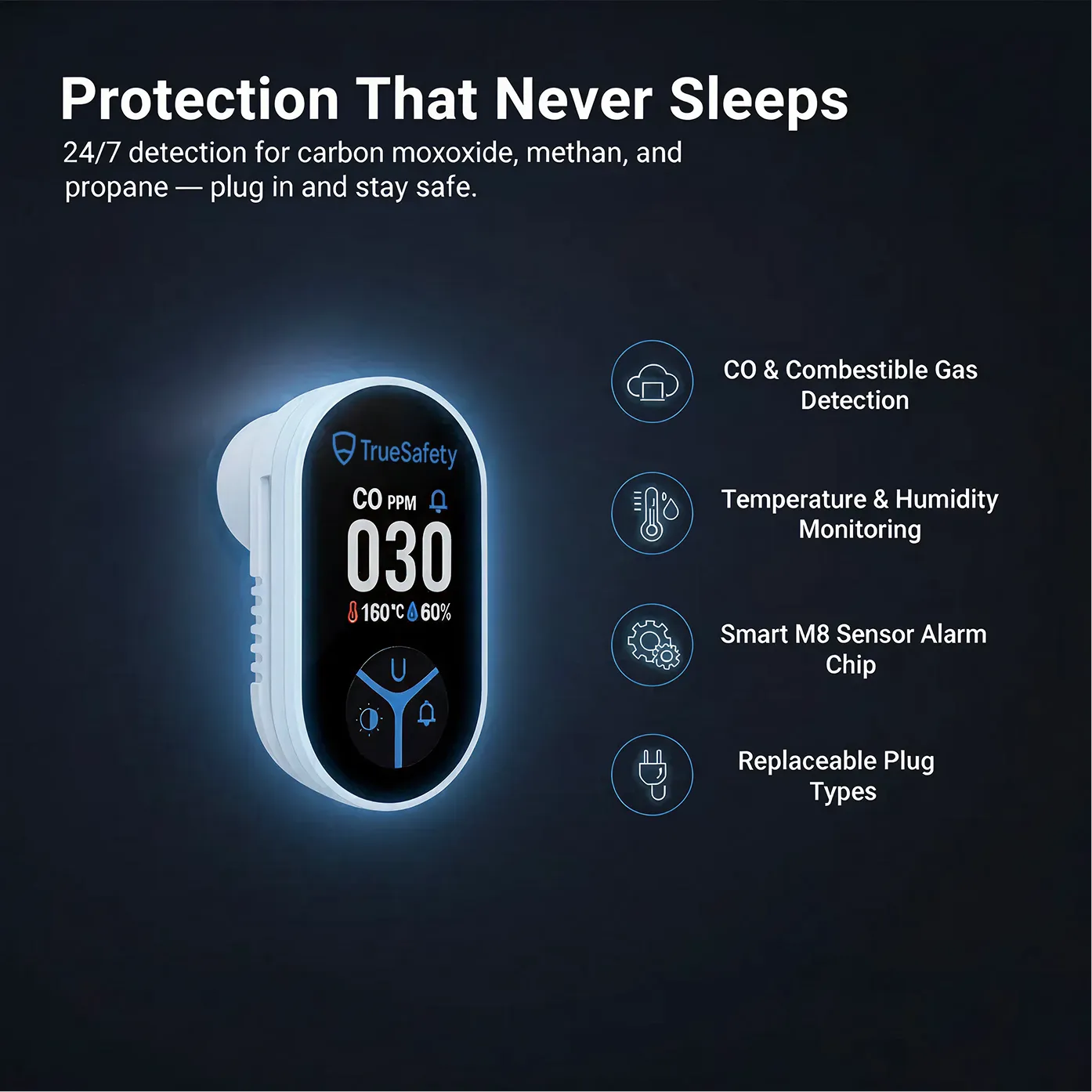
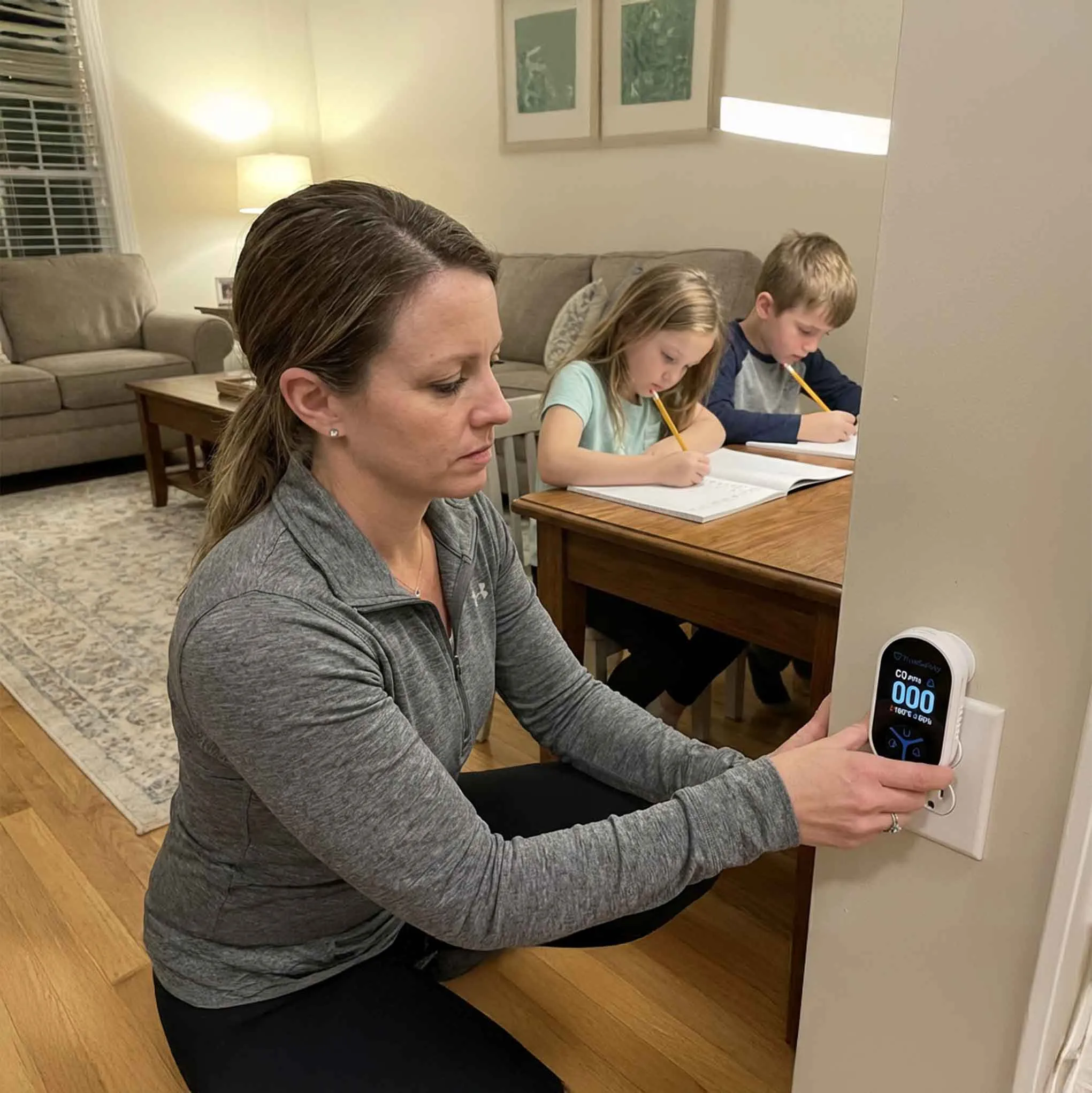
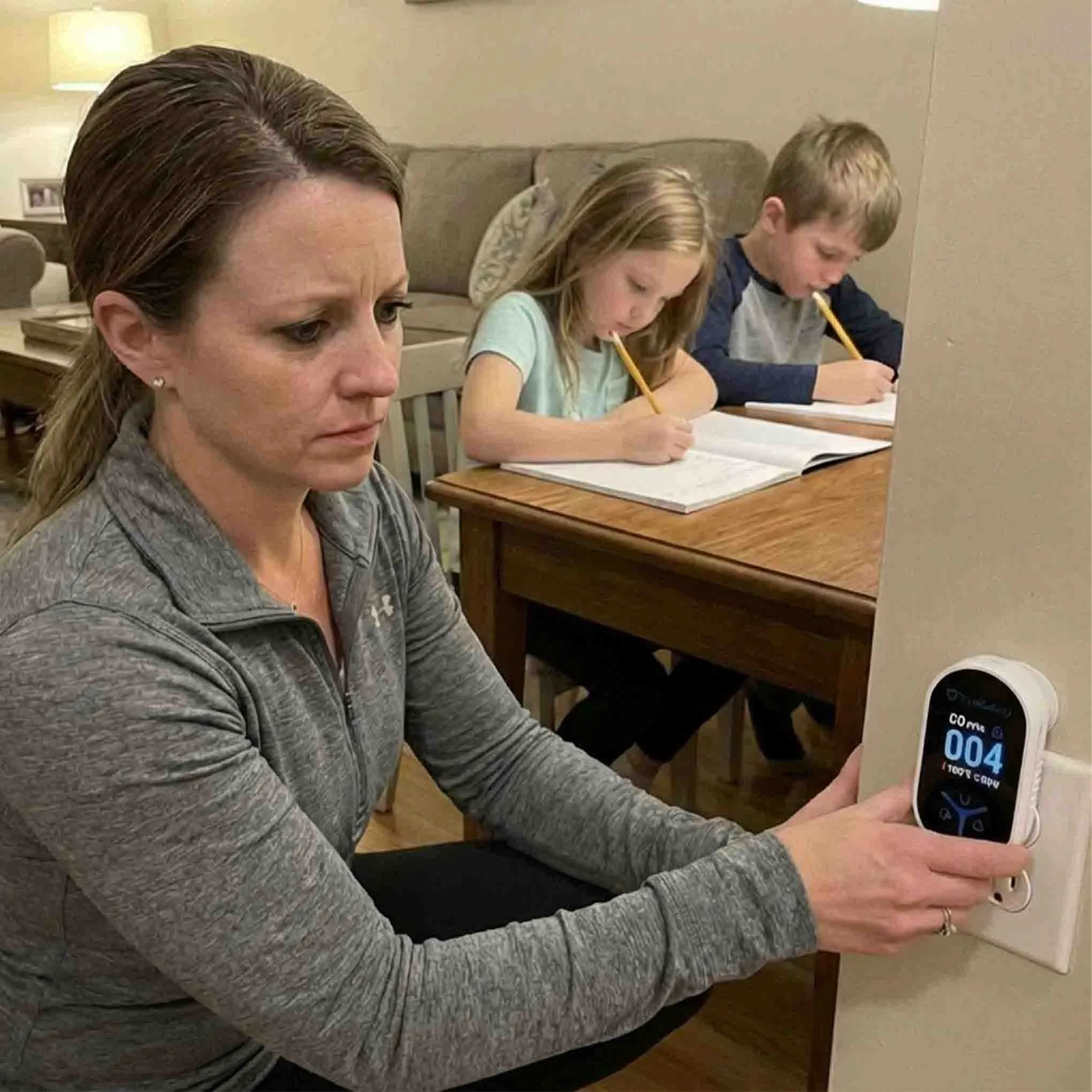
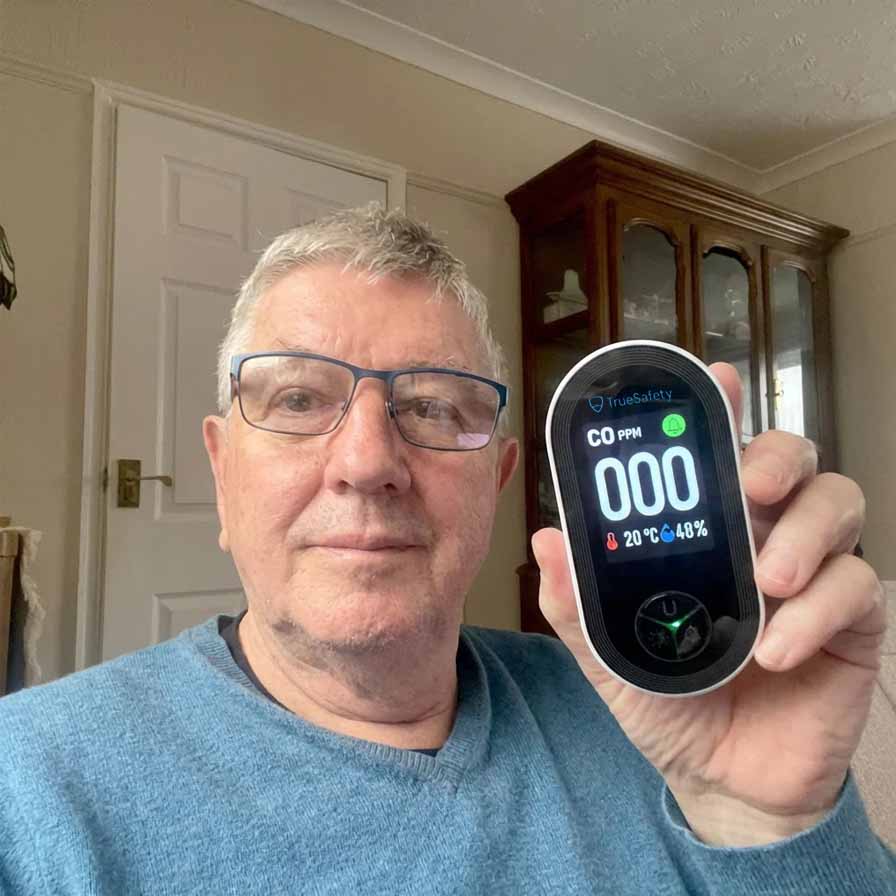
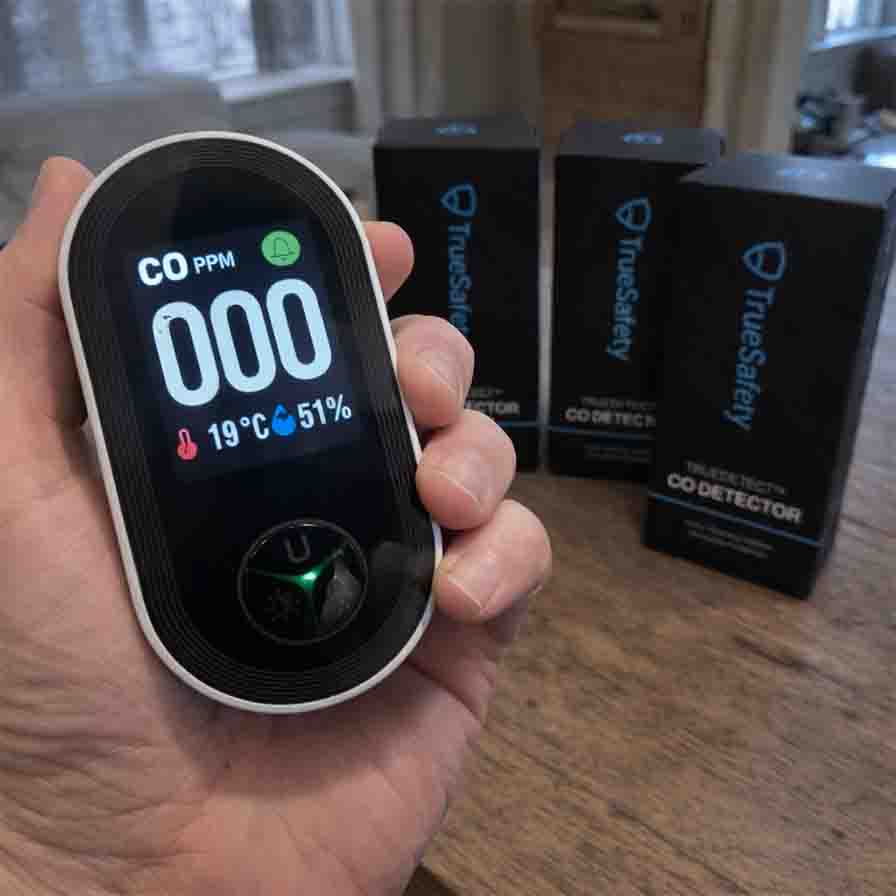
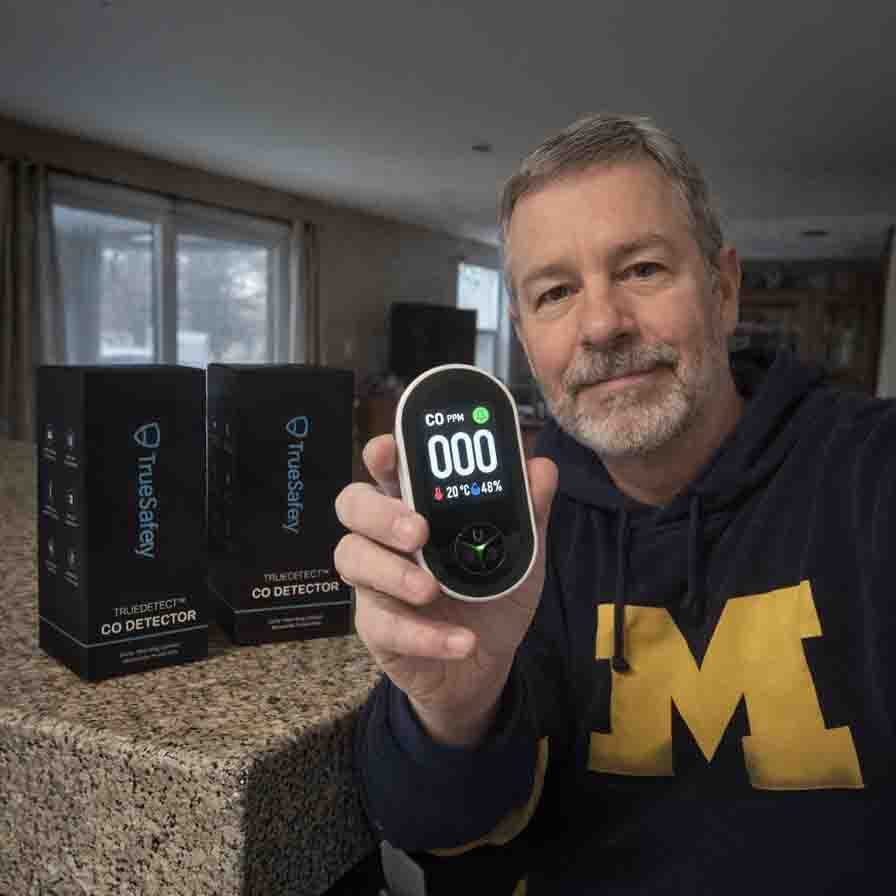
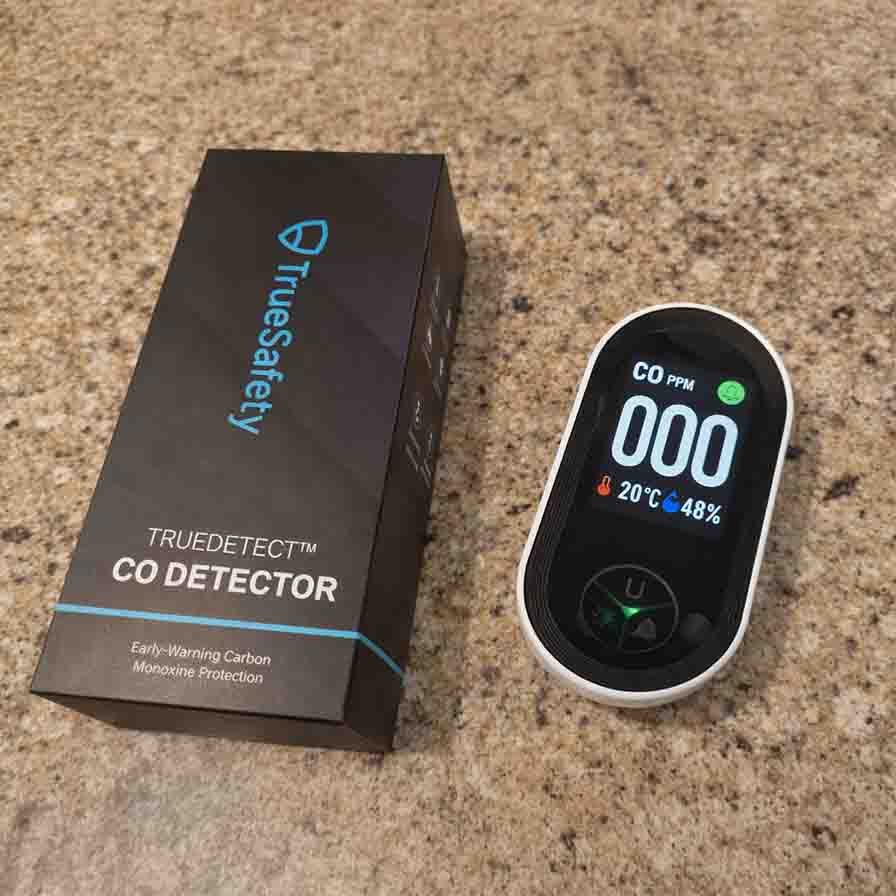
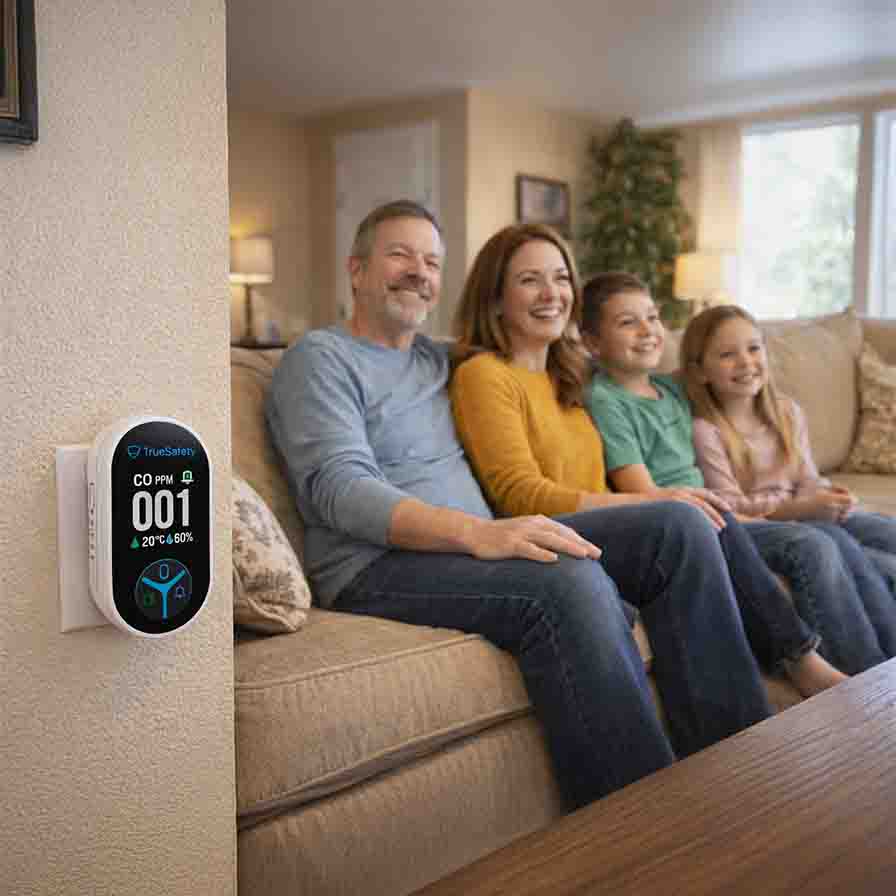
Real-time digital display shows you CO levels right now.
3 PPM. 8 PPM. 15 PPM. 22 PPM.
These levels indicate a small leak that not only damages your daily health and well-being, but may also turn deadly.
You can't see CO. Can't smell it. This display is your only way to prevent a tragedy weeks before, while also improving your family's health and well-being right now.
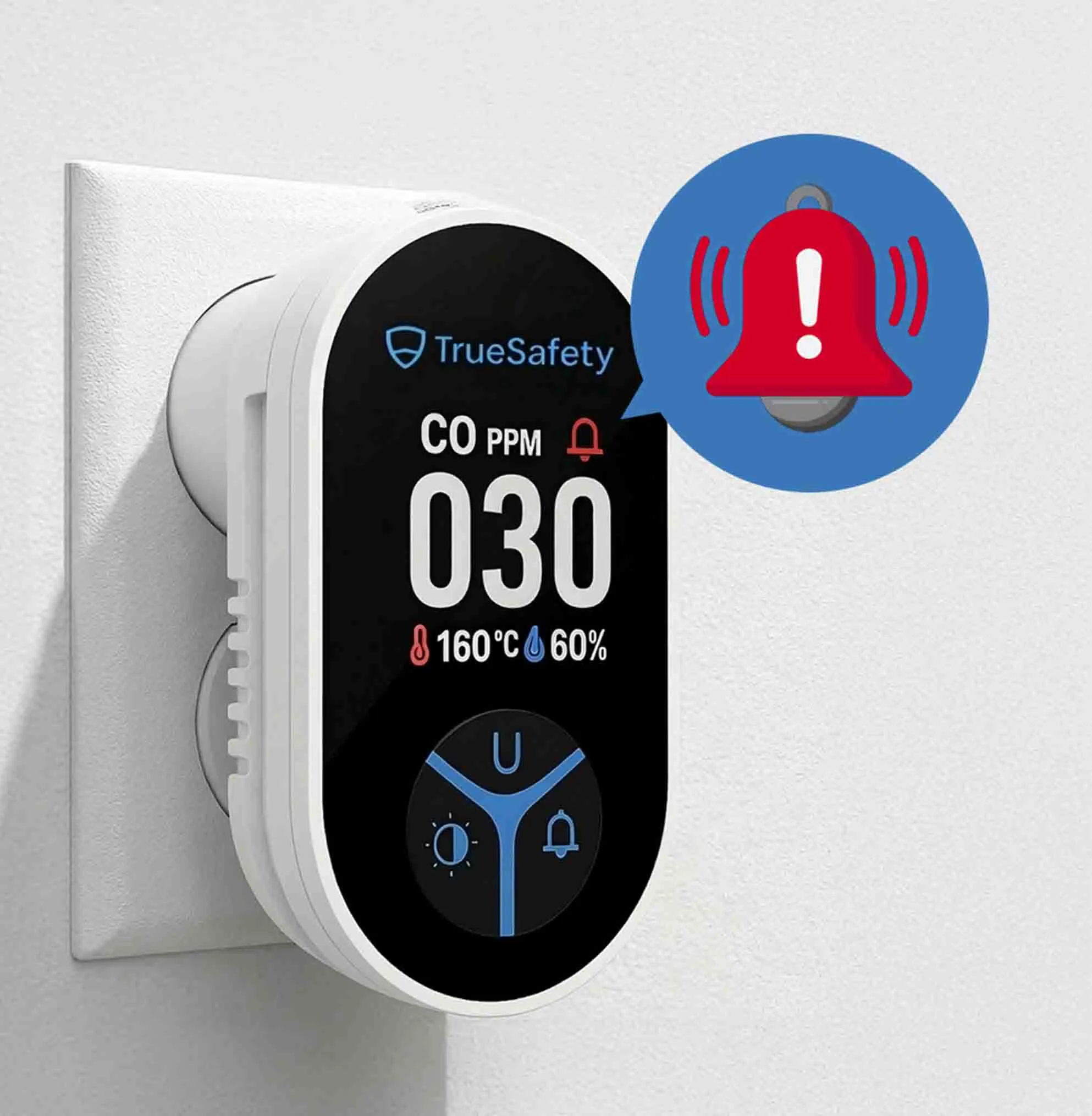
Standard Detectors Alarm at 70PPM (at best). TrueDetect alarms at 30 PPM.
At 30 PPM, you can still think clearly. You can still move quickly. You can get your family out.
That 40-point difference is the difference between escaping without any harm, and never escaping.
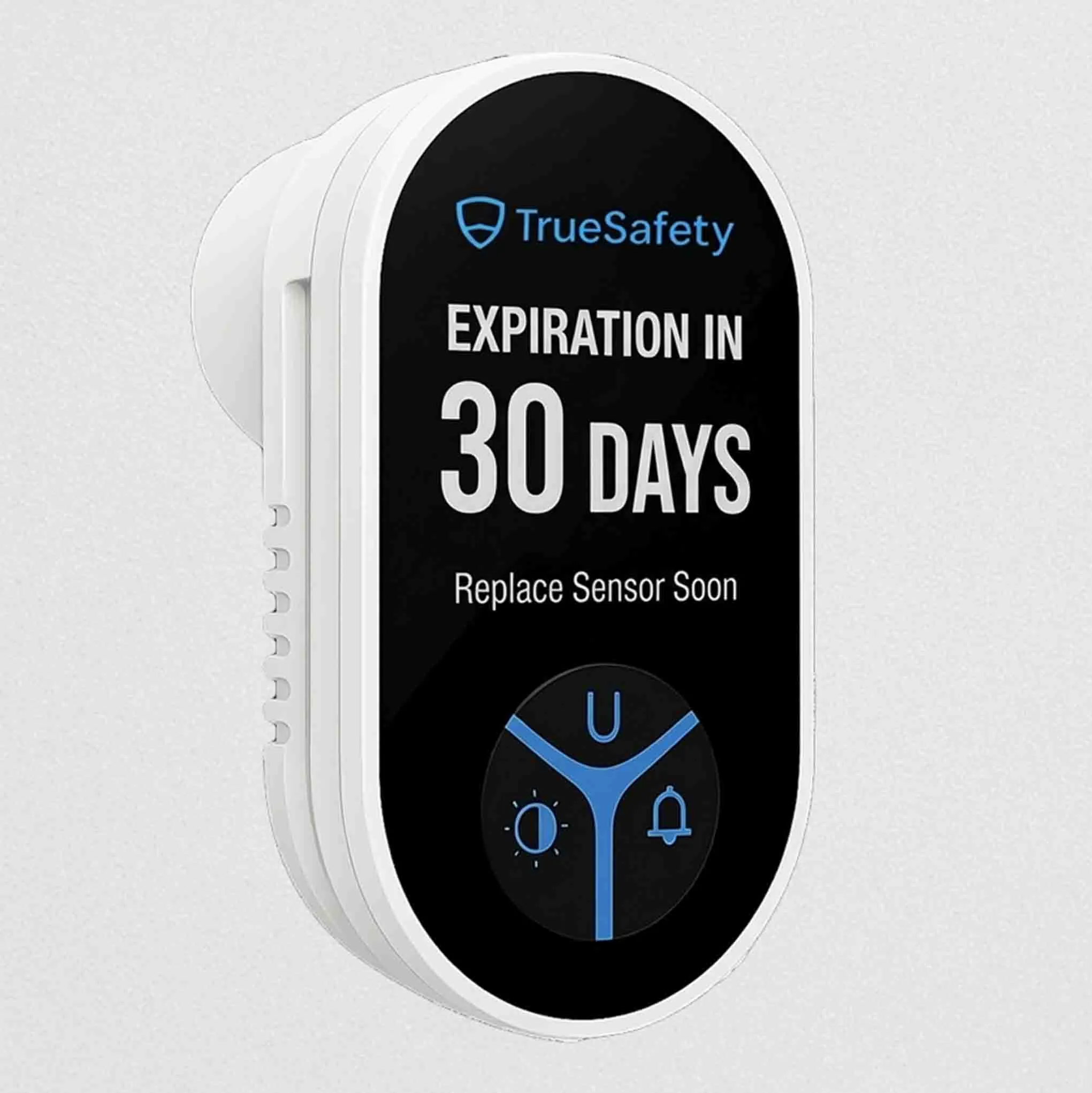
Standard detectors expire after 5-7 years and stop working—but the green light keeps blinking.
Families go years thinking they're protected when their detector expired years ago.
TrueDetect lasts 10 years and actively alerts you when it's nearing expiration.
You'll never have a false sense of security from a detector that stopped working.
Giving you permanent peace of mind.




If for ANY reason in the next 365 days you don't feel:


Standard $20-30 detectors use the cheapest sensors that
barely meet the legal minimum. They can't show you
low-level CO (10-30 PPM), they alarm too late (70+ PPM),
and 57% of them fail during actual leaks (CDC study).
TrueDetect uses professional-grade sensors—the same
technology in fire departments and hospitals. You're
paying for technology that actually works, not a false
sense of security.
Think of it this way: Would you rather spend $79 now and
know you're protected, or risk your family's safety on a
$25 detector that has a coin-flip chance of failing when
you need it most?
Your current detector has three critical problems:
1. It might already be dead.
Most detectors expire after 5-7 years but the green
light keeps blinking. If you don't know when yours was
installed, it could have stopped working years ago.
2. It can't see low-level CO.
Standard detectors don't alarm until 70+ PPM. But
symptoms start at 10-15 PPM. You could be breathing CO
for months—feeling exhausted, foggy, sick—and never know
why.
3. Even if it works, it alarms too late.
By 70 PPM, your brain is shutting down. You're dizzy,
confused, can't move fast. TrueDetect alarms at 30
PPM—when you can still think clearly and actually
escape.
Your current detector might work in an emergency (if
you're lucky). TrueDetect shows you problems before they
become emergencies.
Not necessarily. Small amounts of CO (1-5 PPM) can be
normal from:
• Cooking on gas stove
• Candles burning
• Car running in attached garage
• Outdoor air coming through windows
Here's what to do at each level:
0-9 PPM:
You're safe. This is normal.
10-15 PPM:
Investigate. Check if stove was just used. If it
persists, call HVAC.
15-29 PPM:
Call HVAC immediately. Find and fix the leak.
30+ PPM:
TrueDetect will alarm. Evacuate immediately and call
911.
The display helps you catch small problems before they
become big ones. That's protection standard detectors
can't give you.
Most "premium" detectors ($50-80) still have two
fatal flaws:
1. No real-time display.
They might show the "peak level" after an alarm goes
off, but you can't check your current CO level on
demand. You're still blind until there's an
emergency.
2. They still alarm at 50-70 PPM.
Better than 150 PPM, but still too late. By 50-70 PPM,
your brain function is already impaired.
TrueDetect shows you the exact PPM 24/7 (check it
anytime—before bed, when you feel off, after HVAC
service) AND alarms at 30 PPM (European standard,
where CO deaths are 90% lower).
It's not just "better." It's a completely different
category of protection.
CO levels vary significantly by room. A leak near
your furnace might show 25 PPM in the basement but
only 5 PPM upstairs—until it spreads.
We recommend:
•
1-2 bedroom home:
2 units (bedroom + living area)
•
3+ bedroom home:
3 units (master bedroom, kids' area, near furnace/main
living)
•
Multi-story home:
1 per floor minimum
Place them in areas where you spend the most time
(bedrooms, living room) and near potential CO sources
(furnace room, attached garage).
The 3-pack gives you full home coverage and is our
most popular option (54% off + free shipping).
Yes! That's one of the best features.
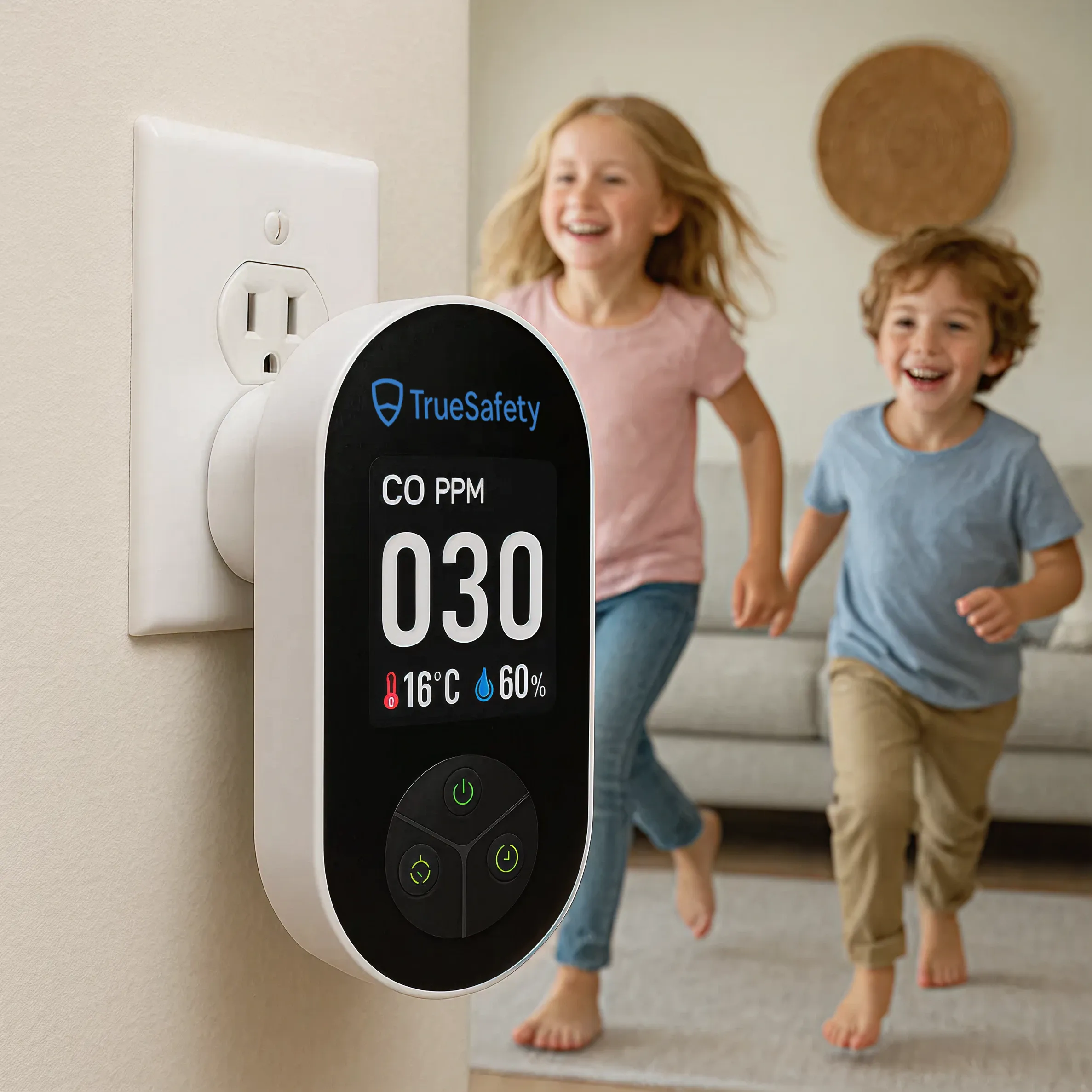
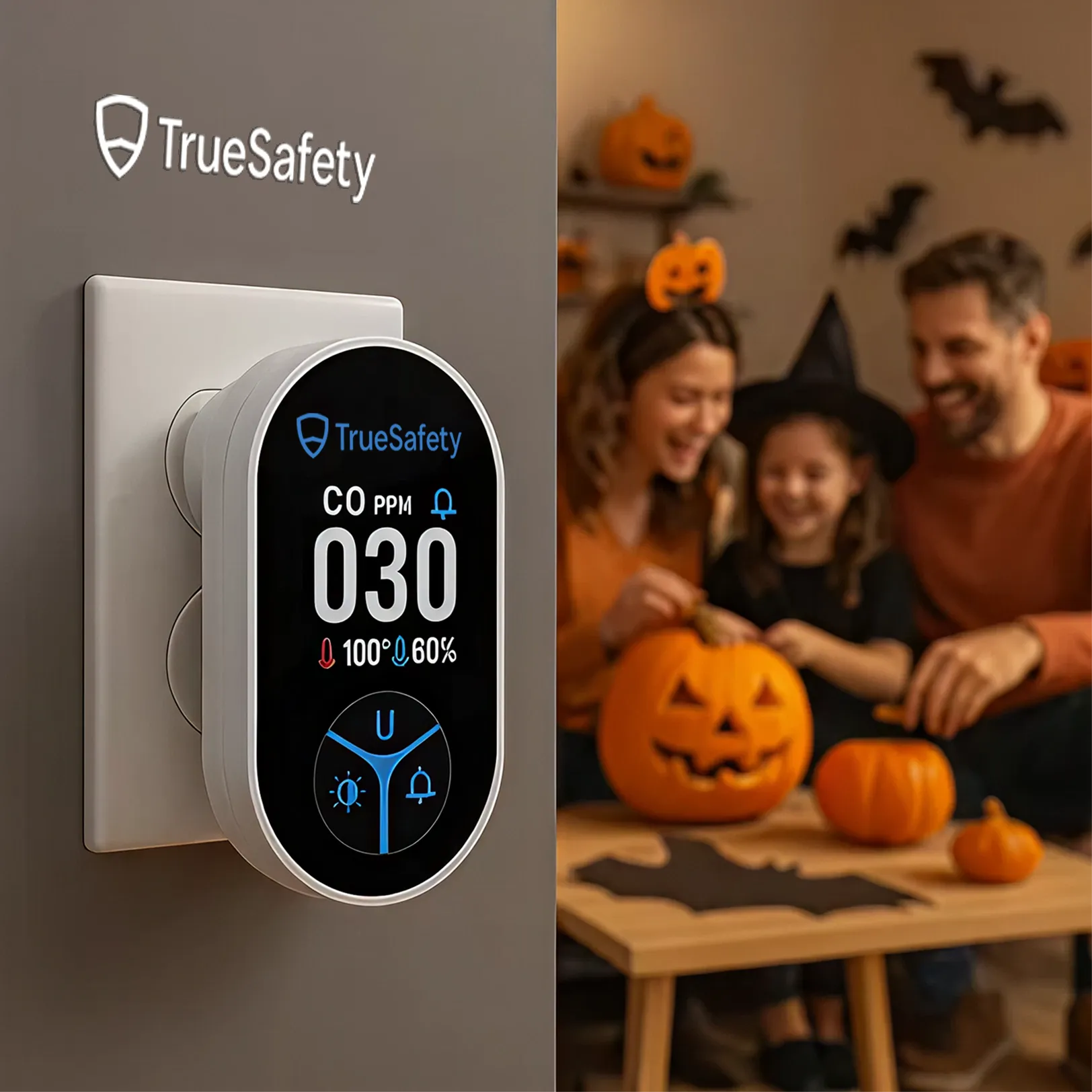
TrueDetect is plug-and-play—no installation, no
drilling, no permanent mounting. Just plug it into any
outlet.
When you move, unplug it and take it with you. Pack it
with your valuables.
This is especially important for renters
because:
• You can't control when your landlord maintains the
furnace
• Landlords often install the cheapest detectors
possible
• You have no idea when the building's detector was last
replaced
• Many detectors in rental units are expired but still
show green lights
TrueDetect gives you protection you can trust,
regardless of what your landlord does (or doesn't do).
TrueDetect lasts 10 years—longer than most standard
detectors (5-7 years).
Here's what makes it different:
Standard detectors expire silently.
The sensor dies, the alarm stops working, but the
green light keeps blinking. Families go years thinking
they're protected when they're not.
TrueDetect actively alerts you 6 months before it
expires.
You'll get plenty of warning to order a replacement.
You'll never be unknowingly unprotected.
One purchase = a full decade of protection. Most
families will only need to replace it once in their
entire time living in a home.
We offer a 365-day money-back guarantee—four full months to try it risk-free.
Order TrueDetect. Plug it in. Check the display daily. Show your family how it works.
If for any reason you don't feel:
Just email us for a full refund. No questions asked. No hassle.
We're confident that once you see "0 PPM" on the display and know you're safe—or catch a small leak before it makes you sick—you'll understand why 10,000+ families trust TrueDetect.
You have nothing to lose and your family's safety to gain.

Loading...